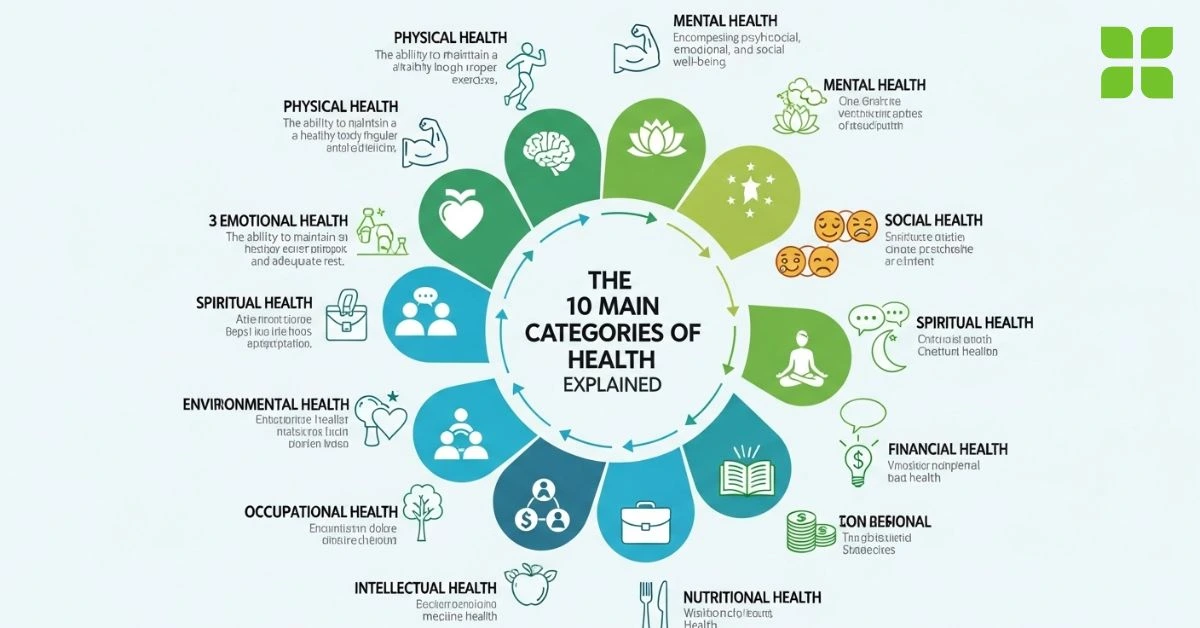
The main categories of health are as follows. Being aware of each of these enables us to take some proactive measures to enhance our health:
Table of Contents
Categories of Health
1. Physical Health
Definition:
The state of the body and its capacity to carry out everyday tasks are referred to as physical health.
Crucial Elements:
enough sleep, a healthy diet, regular exercise, and regular checkups with the doctor.
Relevance prolongs life, improves physical capacities, and prevents chronic illnesses.
2. Mental Health
Definition:
People’s thoughts, feelings, and behaviors are influenced by their mental health, which includes their emotional, psychological, and social well-being.
Crucial Elements:
Mental health treatments, coping strategies, stress reduction, and optimistic thinking.
Relevance vital for managing stress, forming bonds with others, and making decisions.
3. Mental Health
The definition is:
Emotional health involves being aware of, controlling, and properly articulating one’s feelings.
Important Features:
Resilience, self-awareness, empathy, and emotional control.
The significance strengthens bonds, lowers stress, and promotes mental stability.
4. Health and Social
The definition is:
The capacity to build fulfilling interpersonal interactions and adjust to social circumstances is referred to as social health.
Important Features:
communication abilities, wholesome partnerships, social support, and community service.
The significance creates support networks, improves quality of life, and lessens loneliness.
5. Intellectual Health
The definition is:
Intellectual health refers to the ability to think critically, participate in exciting and creative activities, and keep learning new things.
Important Features:
Intellectual engagement, problem-solving abilities, curiosity, and lifelong learning.
The significance maintains mental activity, improves cognitive abilities, and encourages creativity.
6. Environmental Health
Definition:
Environmental health promotes a safe and healthy environment by examining the interactions between humans and their surroundings.
Crucial Elements:
sustainable practices, trash management, secure housing, and clean air and water.
Relevance fosters a sustainable planet, lowers health risks, and avoids illnesses.
Read Article:The 10 Importance of Health: Why is health so important?
7. Spiritual Well-Being
Definition:
Having a feeling of meaning and purpose in life—which may or may not be connected to religion—is a sign of spiritual wellness.
Crucial Elements:
Inner peace-promoting activities, values, beliefs, mindfulness, and meditation.
Relevance increases inner calm, gives one a sense of purpose, and strengthens emotional resilience.
8. Occupational Health
Definition:
Occupational health is concerned with maintaining a safe and healthy workplace and striking a balance between work and personal obligations.
Crucial Elements:
professional advancement, work-life balance, workplace safety, and job happiness.
Significance reduces the risk of occupational diseases, boosts output, and encourages workplace satisfaction.
9. Financial Health
Meaning:
Managing one’s own finances and being able to cope with changes and difficulties in the economy are both considered aspects of financial wellness.
Important Factors:
saving, investing, budgeting, and financial planning.
Significance lowers stress, guarantees financial security, and permits preparing for the future.
10. Community Health
Meaning:
Addressing the health needs and concerns of the community as a whole is the main goal of community health.
Important Factors:
programs for disease prevention, community services, health education, and public health efforts.
Significance enhances the general well-being of the community, lowers health inequities, and advances public health.
In conclusion
In conclusion, leading a happy and fruitful life depends on keeping excellent health. It includes social, mental, and physical well-being, allowing people to carry out everyday tasks, avoid chronic illnesses, and live better lives. It is essential to maintain healthy habits including consistent exercise, a balanced diet, enough sleep, and stress reduction.
A supportive environment, solid social ties, and access to healthcare all contribute to improved general health. Making health a priority not only increases longevity but also enhances enjoyment and day-to-day functioning. Please use the comment box if you need further information or if you have any queries.