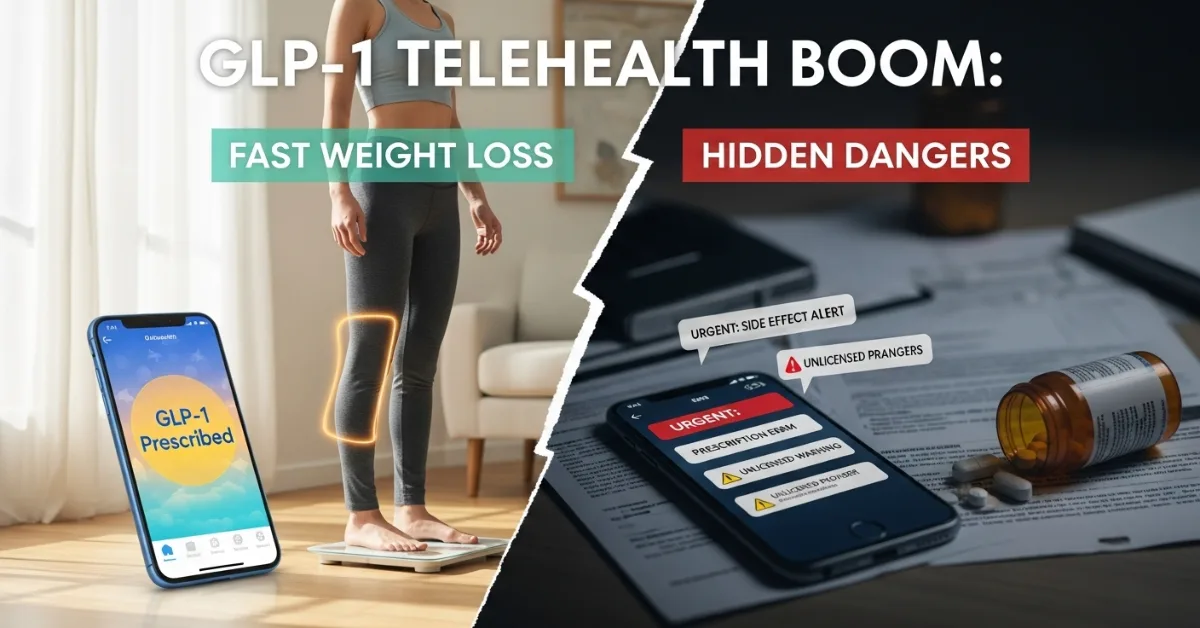
“GLP-1 telehealth makes powerful weight-loss drugs easy to access, but privacy risks remain. Learn the benefits, dangers, and how to protect yourself.”
Table of Contents
Introduction
Obesity remains one of America’s most pressing health challenges. Millions of people are searching for effective, sustainable weight-loss solutions, and in recent years, GLP-1 receptor agonists—a class of drugs including semaglutide (Ozempic, Wegovy) and tirzepatide (Mounjaro, Zepbound)—have taken center stage.
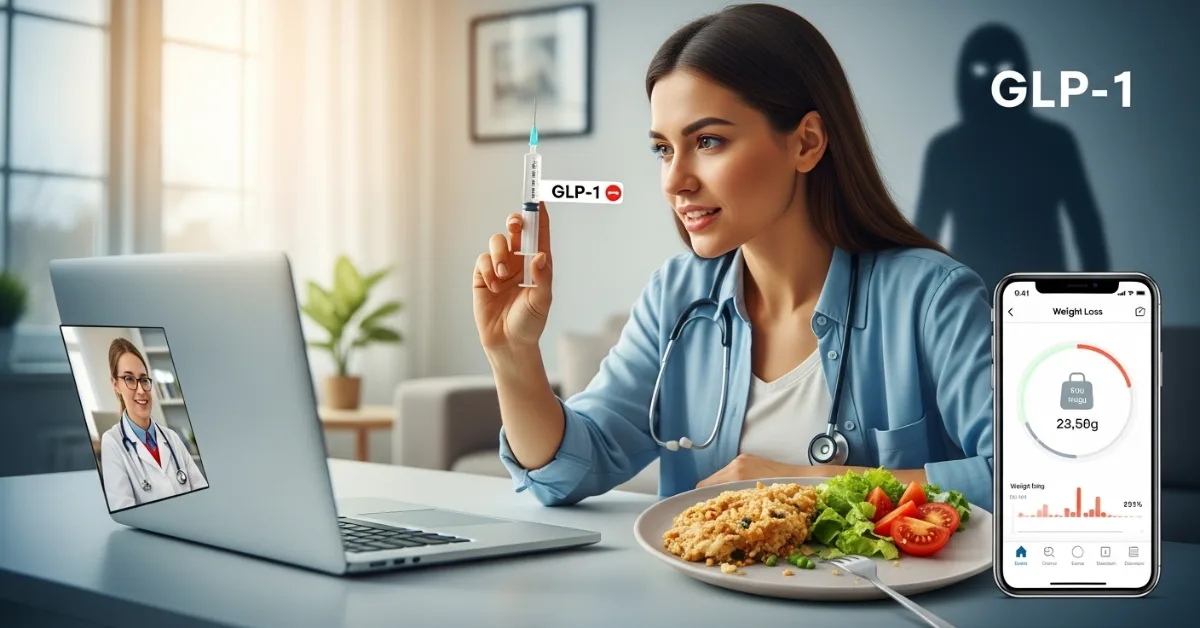
These medications, originally designed to treat type 2 diabetes, have proven remarkably effective for weight management. At the same time, telehealth platforms have exploded in popularity, offering these prescriptions directly to patients through convenient online consultations. Together, they’ve created a booming market that could surpass $30 billion by 2025.
But with this revolution comes a growing concern: patient privacy. The sensitive health data collected by telehealth platforms is often shared, tracked, and sometimes sold—raising legal, ethical, and trust issues. While GLP-1 medications may help transform obesity care, they also highlight the vulnerabilities in America’s rapidly evolving digital healthcare system.
This article explores the dual story of the GLP-1 boom through telehealth: the promise of accessible weight-loss care, and the hidden risks to personal data security.
What’s Driving the GLP-1 Weight-Loss Boom
1. Breakthrough Effectiveness
GLP-1 drugs mimic a natural hormone that slows digestion, reduces appetite, and helps regulate blood sugar. Studies show patients on semaglutide or tirzepatide can lose 15–20% of their body weight—a level of effectiveness rarely seen outside bariatric surgery.
2. Obesity Epidemic in the U.S.
Over 42% of American adults are classified as obese. Beyond aesthetics, obesity is tied to diabetes, heart disease, certain cancers, and reduced life expectancy. The demand for effective treatments has never been greater.
3. Telehealth Convenience
Telehealth companies now connect patients to licensed providers who prescribe GLP-1s after brief virtual consultations. For patients, this means:
- No long waits for appointments
- No awkward in-person discussions
- Fast, discreet prescriptions shipped directly to their door
4. Market Forces
Pharmaceutical giants, digital health startups, and investors see enormous profit potential. With demand skyrocketing, the GLP-1 and telehealth ecosystem is on track to become one of the fastest-growing sectors in modern healthcare.
The Role of Telehealth Platforms
Telehealth companies play a central role in making GLP-1s widely available. Popular platforms offer:
- Subscription models with monthly refills
- Virtual check-ins for dose adjustments
- Integrated apps that track progress and side effects
This digital-first model has democratized access. However, it has also raised red flags about data collection practices and regulatory oversight.
Privacy and Data Concerns
While telehealth may feel convenient and discreet, behind the scenes these platforms are collecting massive amounts of sensitive data:
- Medical histories
- Weight, BMI, and lifestyle details
- Payment and insurance information
- Behavioral data from apps and websites
🔹 How This Data Can Be Misused
- Targeted marketing: Platforms may use your weight-loss journey to sell you supplements, diet plans, or unrelated products.
- Third-party sharing: Data might be shared with advertisers, app developers, or analytics companies.
- Security risks: Cyberattacks on health databases can expose highly personal information.
🔹 Regulatory Landscape
- HIPAA (Health Insurance Portability and Accountability Act): Governs how providers handle patient data. But many telehealth startups use third-party vendors not always bound by HIPAA.
- FTC (Federal Trade Commission): Cracking down on deceptive health data practices.
- State Privacy Laws: States like Washington (My Health My Data Act) and California (CMIA) are introducing stricter rules for digital health platforms.
The patchwork of regulations creates compliance challenges. Many patients don’t realize their information could be handled outside traditional medical protections.
Risks for Patients
- Loss of Trust – Patients may hesitate to use telehealth if they fear misuse of their private data.
- Discrimination Potential – Employers or insurers gaining access to weight-loss data could lead to biased decisions.
- Long-Term Vulnerability – Once shared, health data is nearly impossible to retract. It may exist indefinitely in marketing databases.
Balancing Innovation and Ethics
The GLP-1 telehealth boom highlights a central tension in U.S. healthcare: innovation vs. privacy.
- On one side: Telehealth is making life-changing medications more accessible, reducing obesity and improving public health.
- On the other: Patients may unknowingly trade privacy for convenience.
Experts argue for a middle ground: embracing telehealth innovation while building stronger data protection standards.
Read More: Weight loss strategies
Building a Safer Telehealth Future

1. Provider Responsibilities
Telehealth companies should:
- Limit third-party data sharing
- Adopt transparent privacy policies
- Use encryption and security audits
- Train staff on compliance with HIPAA and state laws
2. Patient Best Practices
Patients can protect themselves by:
- Reading privacy policies before signing up
- Avoiding platforms that share data with advertisers
- Asking providers how their information is stored and used
- Using secure payment methods and apps
3. Policy Recommendations
- Federal government should update HIPAA to reflect modern telehealth practices.
- Stronger FTC oversight of digital health platforms.
- State-level laws that give patients more control over their health data.
Real-World Example
A patient named Samantha, 34, signed up for a GLP-1 program through a telehealth app. Within weeks, she noticed targeted ads for weight-loss supplements across her social media accounts. She later discovered that her data had been shared with third-party marketing companies.
While Samantha benefited from weight loss, she felt her privacy had been compromised. Cases like hers are fueling calls for stricter oversight.
The Bigger Picture
The GLP-1 telehealth boom is not just about weight loss—it reflects broader trends in digital healthcare:
- Patients increasingly expect on-demand, virtual services.
- The line between healthcare and consumer tech is blurring.
- Data is becoming as valuable as the drugs themselves.
How the U.S. navigates this balance will shape the future of medicine—not just for obesity, but for all digital health innovations.
Conclusion
The rise of GLP-1 medications through telehealth marks one of the most significant shifts in modern obesity care. For millions of Americans, these drugs offer hope of sustainable weight loss and improved health. Telehealth platforms make access easier than ever—but at a cost.
That cost may be your privacy. Sensitive health data, if mismanaged, can follow you for life. The challenge now is ensuring that America can harness the benefits of digital healthcare innovation without sacrificing patient trust.
Patients, providers, and policymakers alike must demand transparency, stronger protections, and ethical practices. Only then can the promise of telehealth and GLP-1 drugs be fully realized—without hidden risks lurking behind every click.