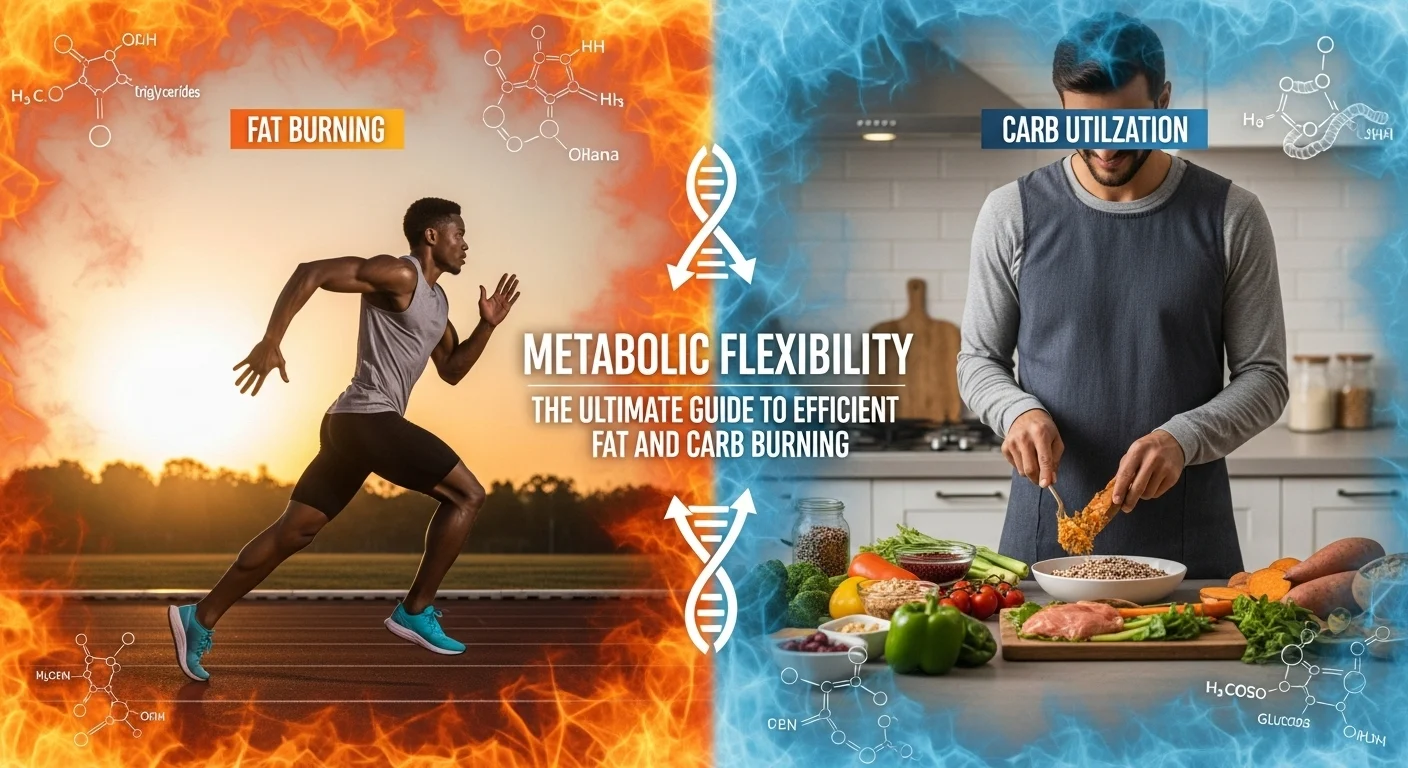
Unlock the secrets of metabolic flexibility to burn fat efficiently, stabilize energy levels, and improve overall health. Learn top foods, exercises, and lifestyle tips.
Ever wonder why some people can eat carbs and fats freely without gaining weight, while others feel drained after meals? The answer lies in metabolic flexibility—your body’s ability to switch efficiently between burning carbohydrates and fats for energy.
Metabolic flexibility is key not only for weight management but also for enhanced energy, exercise performance, and long-term health.
Table of Contents
What is Metabolic Flexibility?

Metabolic flexibility is your body’s ability to adapt fuel usage depending on energy intake or demand:
| Condition | Primary Fuel Source |
| High-carb meal | Glucose (from carbohydrates) |
| Low-carb / fasting | Fat (and ketones) |
A flexible metabolism can efficiently use the right fuel for the right situation. Poor metabolic flexibility can lead to fatigue, difficulty losing weight, and reduced exercise endurance.
Signs of Low Metabolic Flexibility
You may have low metabolic flexibility if you notice:
- Energy crashes after meals
- Sugar cravings or dependence on carbs
- Difficulty losing weight despite a healthy diet
- Low endurance during exercise
- Feeling fatigued between meals
Why Metabolic Flexibility Matters
Metabolic flexibility offers major health benefits:
- Fat burning efficiency: Optimizes stored fat usage
- Stable energy: Reduces spikes and crashes
- Better exercise performance: Enhances endurance and strength
- Supports longevity: Lowers risk of insulin resistance and metabolic syndrome
Diet Strategies for Improving Metabolic Flexibility
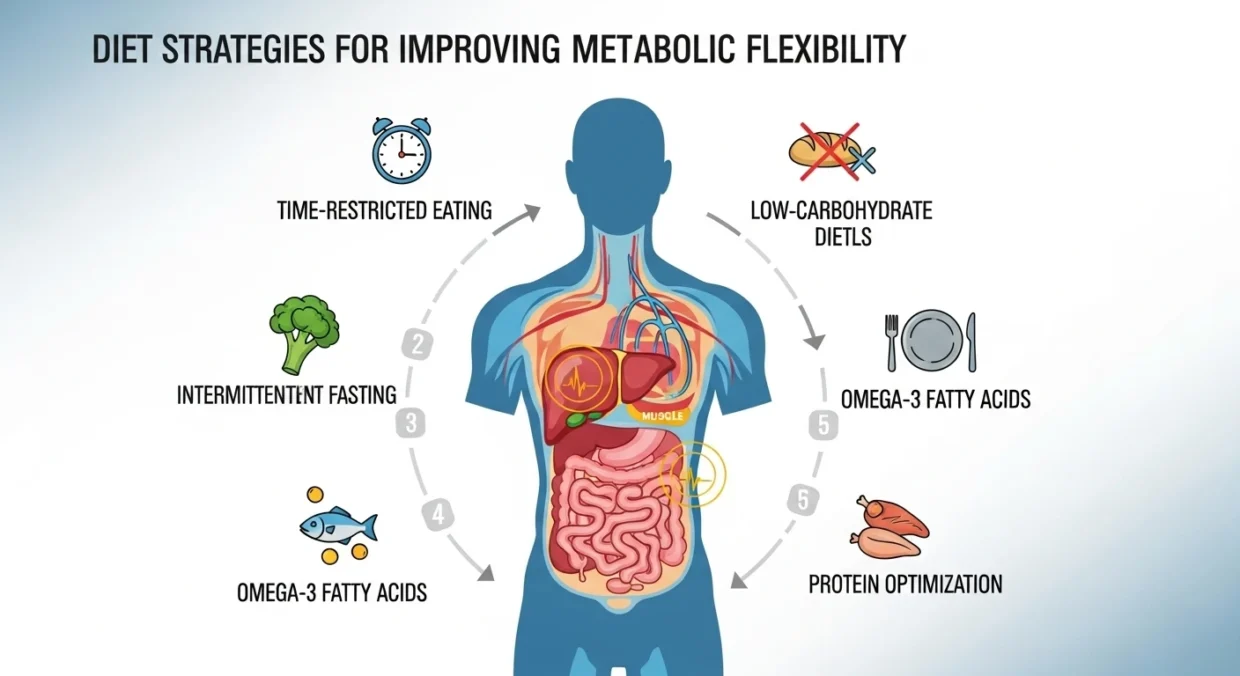
1. Focus on Whole, Nutrient-Dense Foods
- Vegetables, fruits, lean proteins, nuts, healthy fats
- Complex carbs: oats, quinoa, sweet potatoes
- Healthy fats: avocado, olive oil, fatty fish
2. Include Metabolism-Boosting Foods
| Food Group | Examples |
| Leafy Greens | Spinach, kale, collard greens |
| Cruciferous Vegetables | Broccoli, cauliflower, Brussels sprouts |
| Berries | Blueberries, strawberries, raspberries |
| Legumes | Lentils, chickpeas, black beans |
| Omega-3 Sources | Salmon, chia seeds, flax seeds |
Exercise Tips to Enhance Metabolic Flexibility
- Aerobic Exercise: Walking, jogging, or cycling
- HIIT: Trains your body to switch between carbs and fat efficiently
- Strength Training: Builds muscle for better glucose uptake and fat metabolism
- Fasted Workouts: Short fasted sessions encourage fat as fuel
Lifestyle Factors That Support Metabolic Flexibility
- Manage Stress: Meditation, yoga, and deep breathing
- Prioritize Sleep: 7–9 hours per night
- Stay Hydrated: Supports cellular metabolism
- Avoid Processed Foods: Excess sugar and trans fats impair flexibility
Sample Daily Routine for a Metabolically Flexible Body
| Time | Activity / Meal |
| Morning | Fasted walk or light cardio |
| Breakfast | Omelet with spinach, tomatoes, avocado |
| Midday | Strength training session |
| Lunch | Grilled salmon, quinoa, steamed broccoli |
| Snack | Apple with almond butter |
| Dinner | Chicken stir-fry with vegetables and olive oil |
| Evening | Relaxation / meditation |
Supplements That Can Support Metabolic Flexibility
- Omega-3 fatty acids: Improve fat oxidation
- Magnesium: Supports energy metabolism
- Polyphenols: Green tea, berries, improve mitochondrial function
- Protein powders: Ensure adequate amino acid intake
Supplements support whole foods; they don’t replace them.
Read more:Chair Yoga for Beginners: Improve Flexibility, Reduce Stress & Boost Mobility
FAQs About Metabolic Flexibility

Q: Can anyone improve metabolic flexibility?
A: Yes, even those with insulin resistance can enhance flexibility through diet and exercise.
Q: How long to see results?
A: Initial improvements may appear within weeks; full adaptation can take several months.
Q: Are supplements necessary?
A: Not always. Whole foods are most effective, supplements are supportive.
Benefits of Metabolic Flexibility for Longevity
Metabolic flexibility can:
- Reduce chronic disease risk
- Maintain energy and cognitive function
- Support muscle mass and endurance
Think of it as training your body to adapt to dietary and physical stress efficiently.
Bottom Line
Metabolic flexibility is a game-changer for energy, fat burning, and long-term health. By combining nutrient-rich foods, strategic exercise, quality sleep, stress management, and supportive supplementation, your body becomes more efficient at switching between fuel sources.
Start small: add fasted walks, healthy fats, and reduce processed carbs. Over time, you’ll notice steady energy, improved fat burning, and better overall health.
Read More :Top 10 Fat-Burning Workouts to Lose Weight Fast and Boost Fitness